The Market Always Bites Back
Part 3 of the hyhy.app series. Why trading 15 minute BTC contracts means trading microstructure, what a regime shift looks like when it costs you, and what three months of live data suggest about when they happen.
By HYHY.APP ·
What was the gap in part 2?
In Making a Trade out of the Model, I stopped where I begrudgingly admitted there was still a gap in how I managed stop-losses and risk. Today, let's talk about losses.
The gap is simply that trading 15 minute BTC contracts is trading in microstructure. The regime can change at any point during the full 15 minutes, and it does so without warning.
What does a regime shift look like?
Here is Sep 15 at 10:00 am. The model was tracking cleanly and building conviction into the entry.
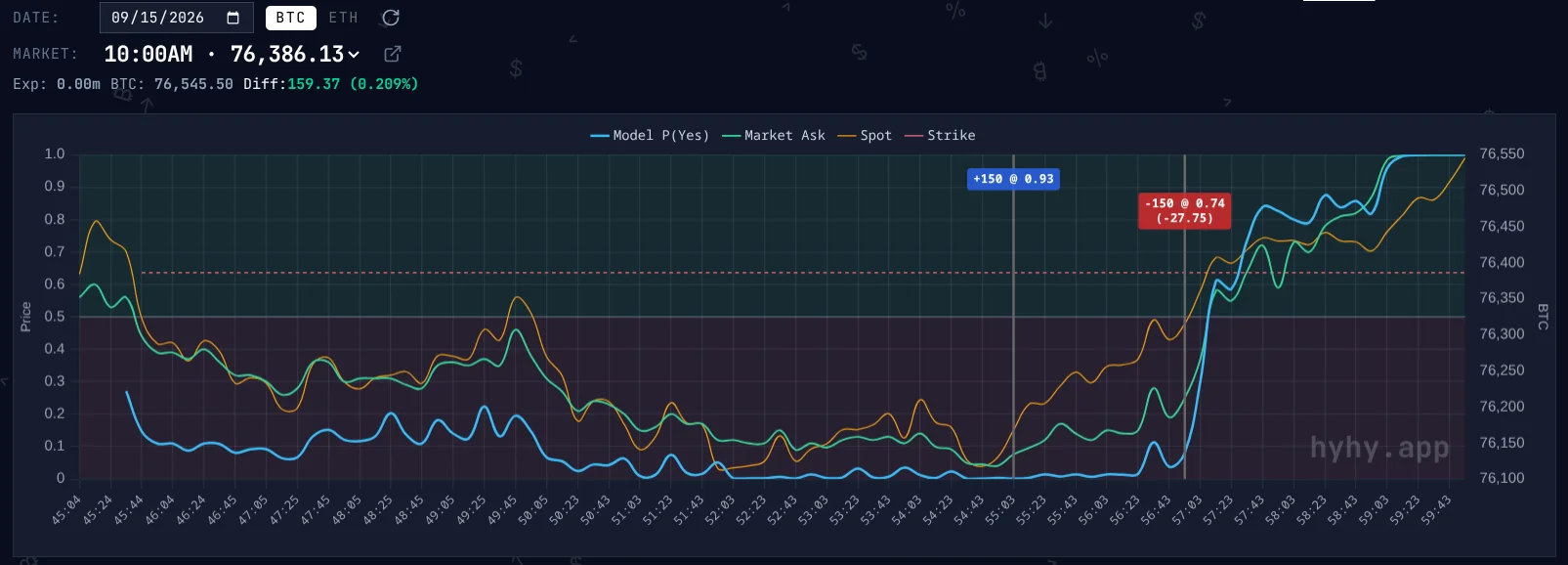
The model and market had been moving in lockstep, which is the cleanest scenario we could hope for. At entry, the drift upward was within my execution tolerance, and the expectation was that spot would continue to trend down. Did it, though?
Instead, the market kept drifting upward. The regime shifted. This was not the same wobble or gamma trap from part 2. There was no lag and no model chasing itself.
What happens when a shift meets a gamma trap?
Here is another example from Sep 14 at 9:15 am. What a gamma whipsaw.
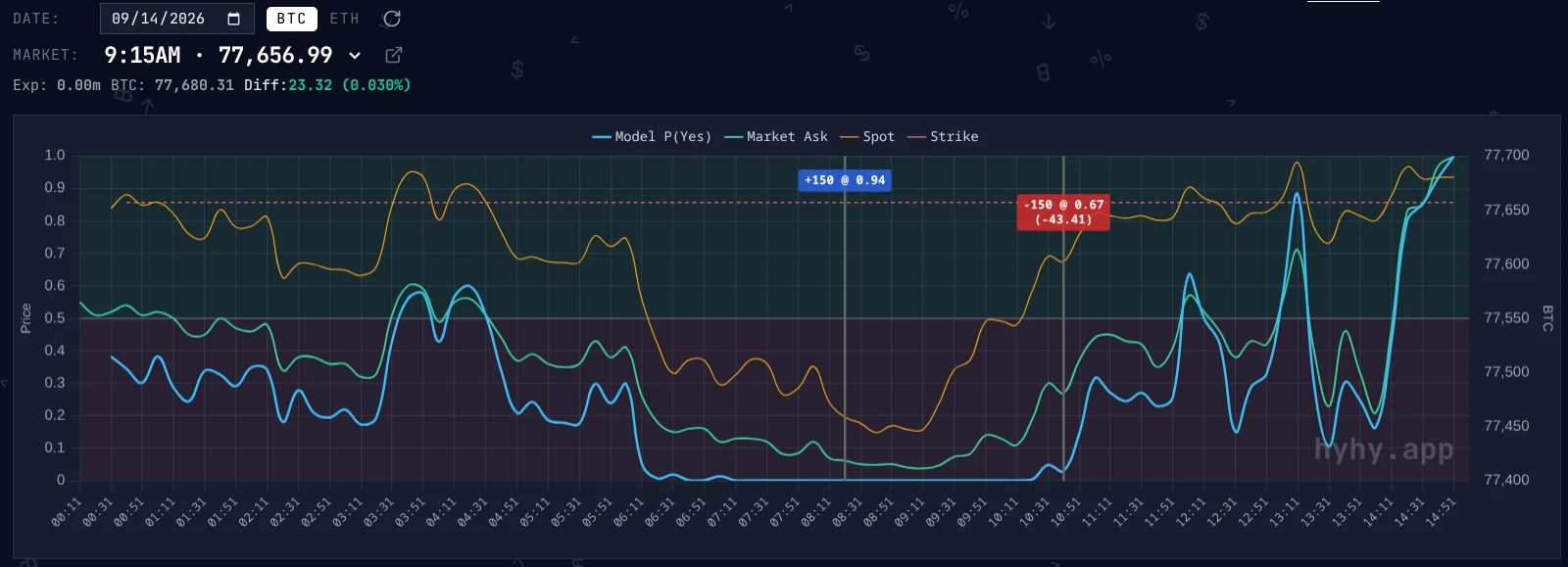
It was the same regime change, followed by a gamma trap whipsaw. If I had not exited the trade, it would have been a complete wipeout.
The market giveth and the market taketh away, and it does not do refunds.
What is the lesson?
The lesson is not that the model or the entry was wrong. Some percentage of trades are going to take a loss when the regime turns against you mid-position. That has to be underwritten going in, not diagnosed after the fact.
At the end of the day, you cannot win them all. If you are not taking losses like these occasionally, you are probably not taking enough risk to matter.
What have the last three months shown?
Here is what I have seen over the last three months.
- Weekday mornings in New York, especially Mondays, have the most regime shifts. My guess is that this is when market makers and macro flow are most active, but that is a hypothesis and not a finding.
- Asian hours have treated me better.
- Friday evening through Saturday is the dullest stretch.
If a strategy never shows a loss like these, either the sample is too small or the risk is hiding somewhere you have not looked yet. If someone tells you they hit 100% of the time, run.